
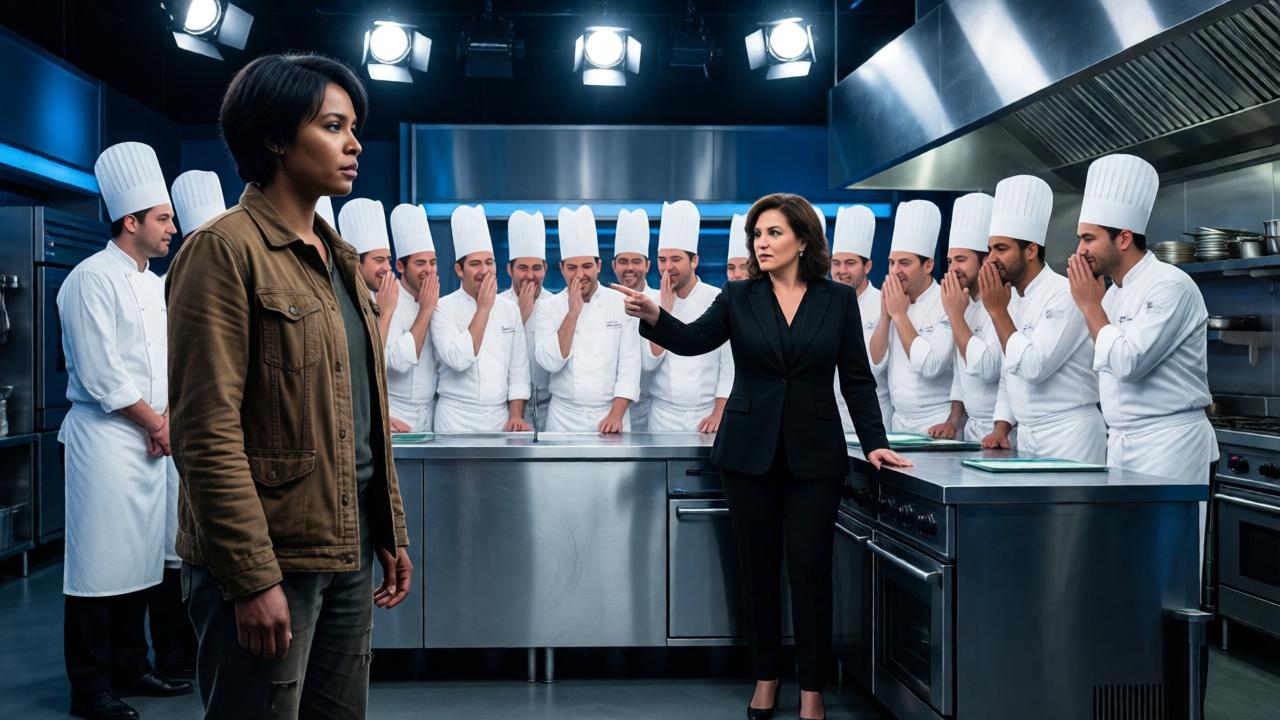
The laughter was a physical force, a wall of sound that hit Tanisha with the heat of twenty industrial stoves. ‘Who invited this beggar to cook here?’ Nikol’s voice, sharp as a honed blade, cut through the studio’s sterile air. She stood, arms crossed, a queen surveying a peasant. ‘If you cook well, I’ll give you $60,000.’ The twenty chefs in their pristine whites, their toolkits worth more than Tanisha’s yearly rent, smirked and shook their heads. To them, she was trash that had somehow blown in from the street. But Tanisha, 25, her hands still bearing the faint scent of bleach and grease from her shift, didn’t flinch. She was used to being treated like a beggar.
Her world had been a cramped Brooklyn diner, a place of ‘last resorts,’ where she washed dishes, mopped floors, and cooked the same tired specials. ‘Just do the basics and shut up,’ the owner would yell. Her voice was a nuisance; her ideas, an affront. She remembered the morning she dared to craft a new sauce, a labor of love and intuition. The head cook took a spoonful, his face twisting in theatrical disgust. Without a word, he walked to the trash and poured the entire pot out, the thick liquid splattering the bin’s liner right in front of her. The message was clear: ‘You think you’re a chef? You work in a dump.’ She had swallowed the humiliation, her silence a familiar armor.
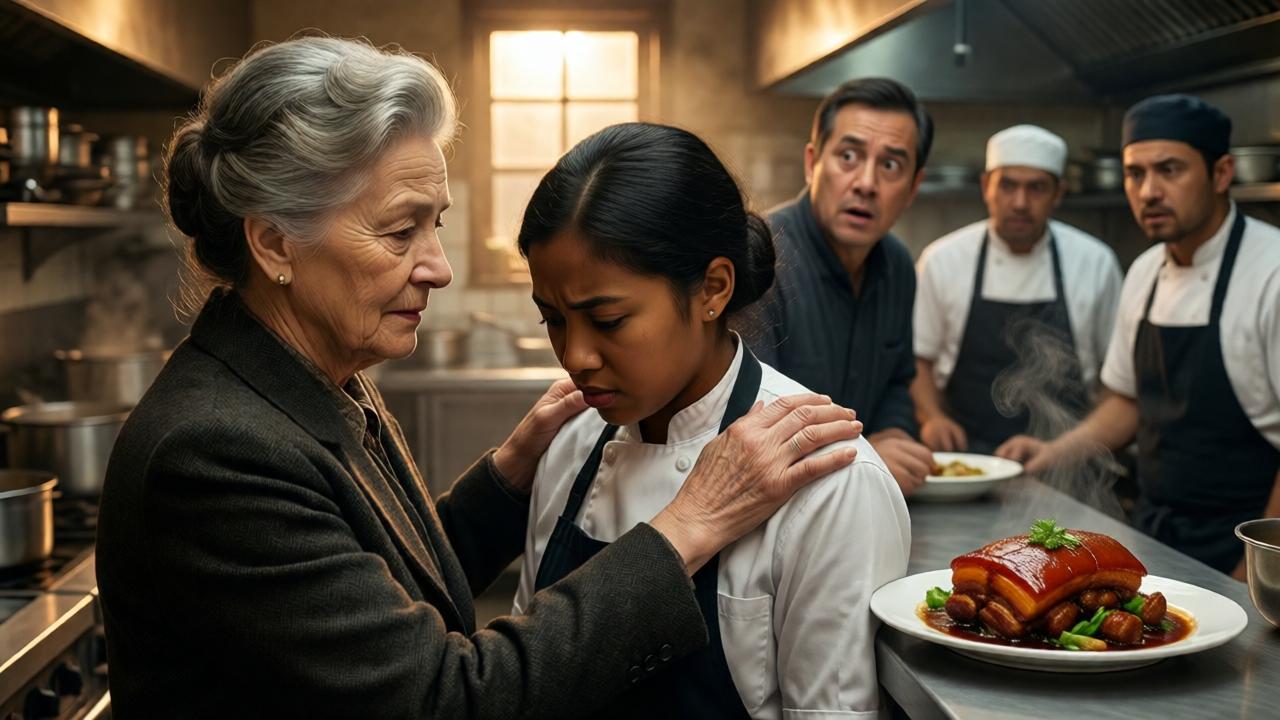
Then, Dorothy arrived. Elegant, over sixty, she was a vision utterly alien to the greasy spoon. ‘Tired of pretty food that tastes like nothing,’ she later explained. She ordered the daily special—a braised pork shoulder Tanisha had prepared. Dorothy took one bite, froze, and set her fork down. She stood and marched straight to the kitchen, pushing the swinging door open. ‘Who made this dish?’ The room iced over. The owner turned pale. ‘Sorry, ma’am. It was Tanisha. She’s new. We’ll redo it at no charge,’ he stammered. A cook snorted, looking at Tanisha and shaking his head with pity. Tanisha braced for the blow. But Dorothy’s eyes found hers, shining. ‘Redo it?’ she said, her voice trembling with emotion. ‘This was the best dish I’ve eaten in the last ten years.’
That moment was a key turning in a locked door. Dorothy told her about the Manhattan competition, a televised gauntlet for culinary stars. Tanisha’s co-workers howled. ‘Her? On TV?’ The doubt was a chorus she knew by heart. Yet, a quiet ember, long buried under layers of grime and scorn, began to glow. She went. She was blocked by security, dismissed by the receptionist, a nobody in a place for somebodies. She was about to turn back—to return to the familiar shadows—when the studio door swung open. And there stood Nikol, her verdict already etched on her face before Tanisha had even picked up a knife.
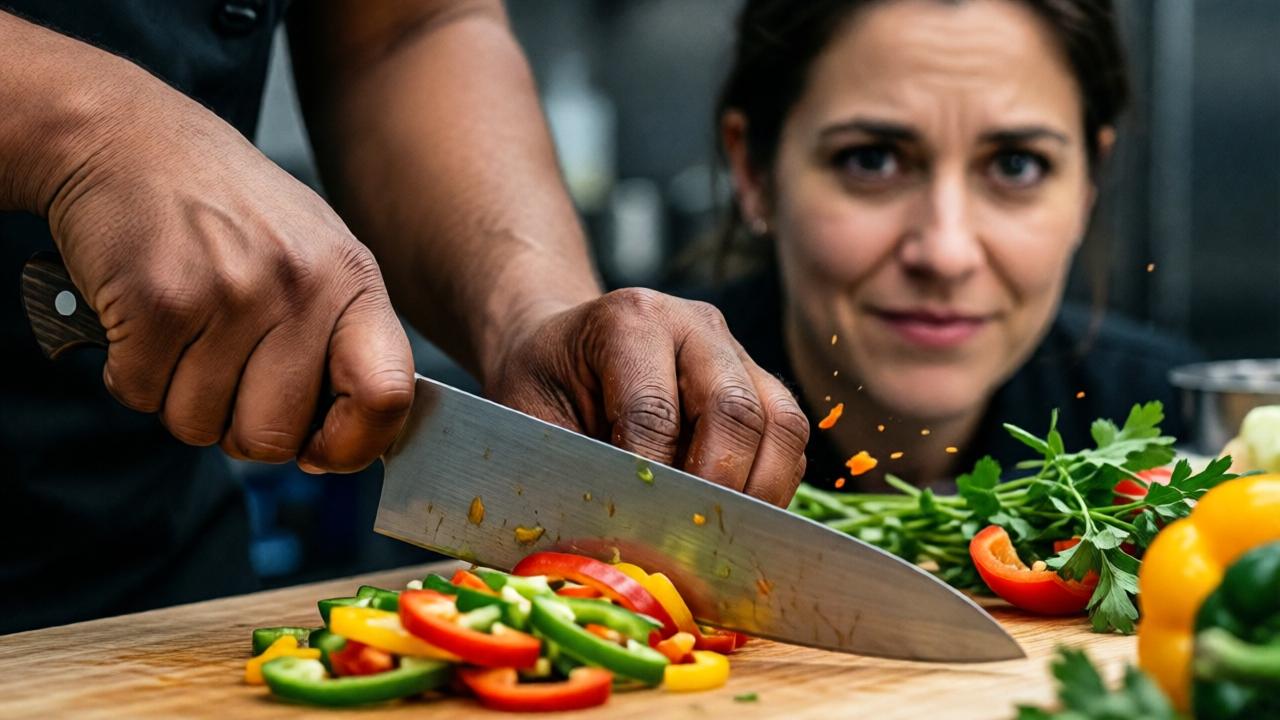
Now, under the blinding lights and the weight of twenty sneers, Nikol pointed to the pristine, intimidating stove. ‘Well?’ she challenged, the unspoken command hanging in the air: *Run away. Know your place.* The studio held its breath. The cameramen zoomed in, hoping for a tearful retreat. But Tanisha, who had tasted ashes and learned to find flavor in resilience, simply walked forward. She ignored the imported knives laid out for the contestants and pulled from her bag her own single, well-worn chef’s knife. She met Nikol’s gaze, and for the first time, her voice, clear and steady, broke her professional silence. ‘You wanted a cook,’ she said, her fingers curling around a bunch of fresh thyme. ‘Let’s cook.’