
The city hummed with indifferent life as Michael pulled his car to the curb, a tender smile softening his features. He turned to Clara, his fiancée, whose eyes sparkled with the promise of a perfect future. “Wait here, my love,” he said, his voice warm. “I want to get something special for Mom. This meeting has to be perfect.” He squeezed her hand before disappearing into the flow of pedestrians, leaving Clara bathed in the golden-hour light, a picture of anticipation.

Alone, Clara’s gaze drifted and settled on a figure hunched by the sidewalk—a woman, weathered and worn, with one sleeve of her threadbare coat hanging empty. She was diligently shining a passerby’s shoes. A flicker of distaste crossed Clara’s face. When the customer left, Clara approached, her heels clicking a sharp rhythm on the pavement. “What happened to your other arm?” she asked, her tone not curious but accusatory. The woman kept her head low. “I don’t have it. I’m so sorry,” she murmured, the apology ingrained by hardship. But instead of pity, a cold irritation seized Clara. “You’re too slow,” she spat, her voice a venomous whisper. “Poor people only waste other people’s time.” To the horror of a few onlookers, she delivered a sharp, dismissive kick to the woman’s shoeshine box.
The woman flinched but did not look up, her single hand moving faster over the leather, a silent testament to endured humiliations. “Faster! I’m not going to wait forever,” Clara commanded, her words lashing like a whip. Each insult, each contemptuous sigh, built a wall of ugliness where kindness should have been. When the shoes gleamed, Clara threw a crumpled bill onto the grimy ground. She turned, her chin held high, and walked back to the car with a proud, unburdened stride, as if scrubbing a minor annoyance from her perfect day.

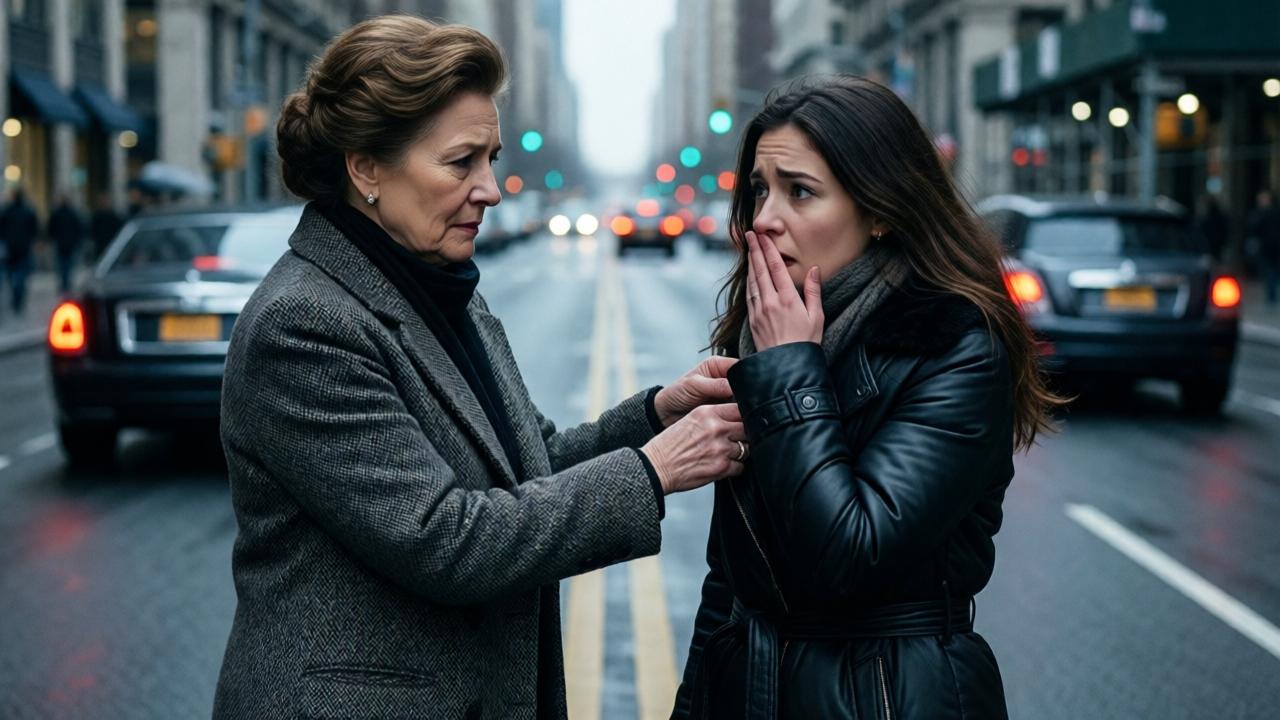
At that precise moment, Michael returned, his hands empty. His eyes were no longer warm but glacial. He pointed not to a gift shop, but directly at the poor woman now gathering her tools. “Do you see her?” he asked, his voice terrifyingly calm. “That’s my mother.” Clara’s world shattered. Her eyes widened in pure, unadulterated horror as the blood drained from her face. “Wait… That’s your mother? But how? Why?” she gasped, the words barely escaping her tightening throat. Two guards then approached the woman, handing her a elegant new coat. She stood, shrugged off her old garment, and calmly put it on. As she did, she straightened her posture, and suddenly, miraculously, both of her arms were revealed—perfectly fine. The mother turned, a serene, knowing smile on her face as she walked toward the paralyzed Clara.
“A person’s true character,” the mother said, her voice clear and carrying, “is revealed in how they treat those from whom they expect nothing in return.” The finality in her tone was absolute. Without another word, without a single glance back at the woman he thought he loved, Michael opened the car door for his mother. They drove away, leaving Clara utterly alone in the middle of the bustling street, the echo of her own cruelty the only companion she had left. The lesson was complete, and its cost was everything.