

The air in the grand hall was thick with condescension. On stage, Daniel, a man whose clothes told a story of hardship, clutched a worn saxophone. A voice, dripping with mockery, sliced through the quiet from the judges’ table. “If I play well, will you give me a plate of food?” Richard, the head judge, sneered, his lips curling into a cruel smile. He leaned into his microphone, his voice booming. “I’ll give you a whole restaurant and even kiss you on the lips, you bum.” The audience erupted in laughter, a wave of derision that washed over the solitary figure. Daniel didn’t respond. He simply took a deep, shuddering breath, a man steeling himself against a storm, and raised the saxophone to his lips.
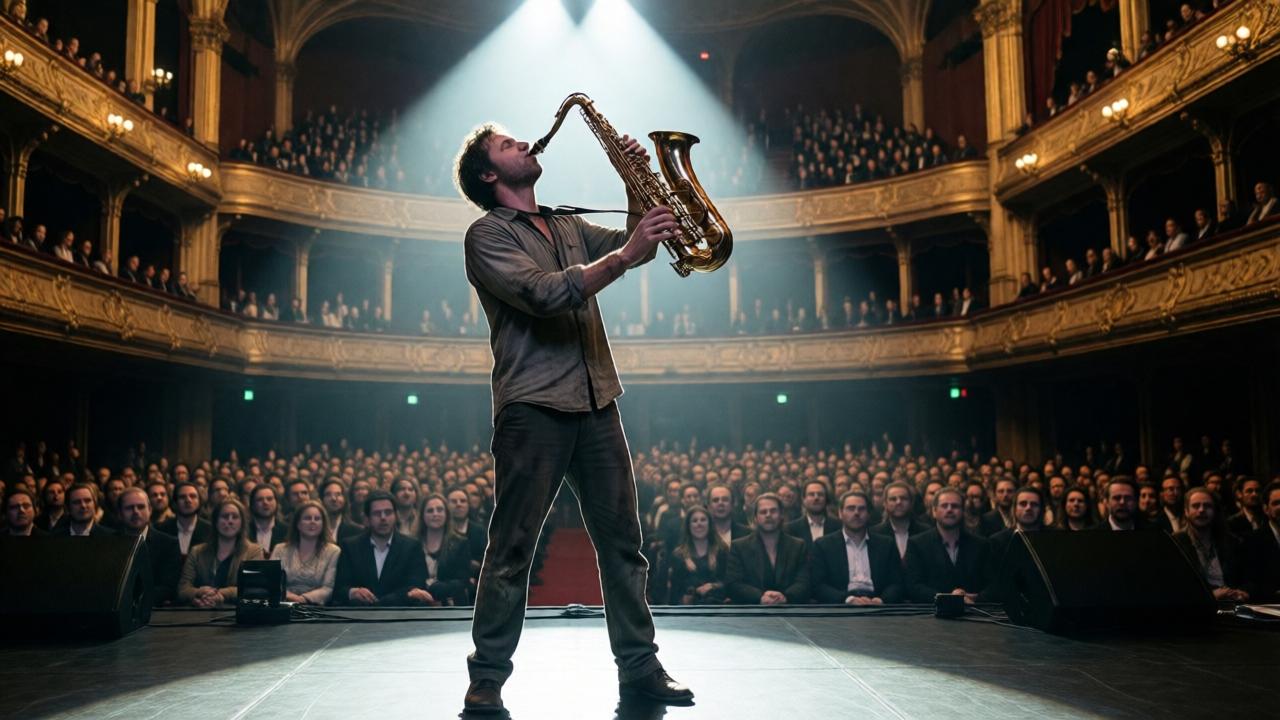
He played the first note. It was a fragile, trembling sound, a seedling pushing through cracked concrete. But it was a sound. Before the next note could form, a sickening *splash* echoed through the hall. A bucket of garish red paint, rigged from the ceiling, cascaded down, drenching him completely. The paint ran in rivulets down his matted hair, over his closed eyes, staining his threadbare jacket, and dripping from the brass of his saxophone. The hall erupted in even louder, crueler laughter. Backstage, Vincent and the other contestants were rolling on the floor, howling. Richard stood up, his face a mask of triumphant scorn. “Did you really think we’d let a bum play here?” he shouted, his voice cutting through the cacophony. From the audience, a woman named Claire, her heart breaking at the spectacle, rushed onto the stage. “Come on, Daniel, let’s go,” she pleaded, her voice gentle. “You don’t deserve this.” Daniel took a step to leave, the weight of the paint and the humiliation almost physical. But he stopped. In his mind, he heard Rose, the old woman who had given him the saxophone. “You have a gift. You can’t waste it.”
He turned slowly back to the sea of laughing faces. Paint streaked his vision like blood-red tears. “Paint or no paint,” he said, his voice low but carrying to the back rows, “I’m going to play.” With a calm defiance, he wiped the mouthpiece clean with a relatively dry part of his sleeve, put the saxophone back to his lips, and began. The melody that emerged was no longer shaky. It was a raw, soul-deep cry that transformed into a haunting, beautiful song. He began to sing, his voice rough with emotion but clear as a bell. “They told me I was nothing. Threw me out in the cold. They laughed at my bare feet, but God had other plans for these hands… I’m still standing, through the pain and through the shame. God remembered, God remembered me. My father left this song inside these broken keys.”
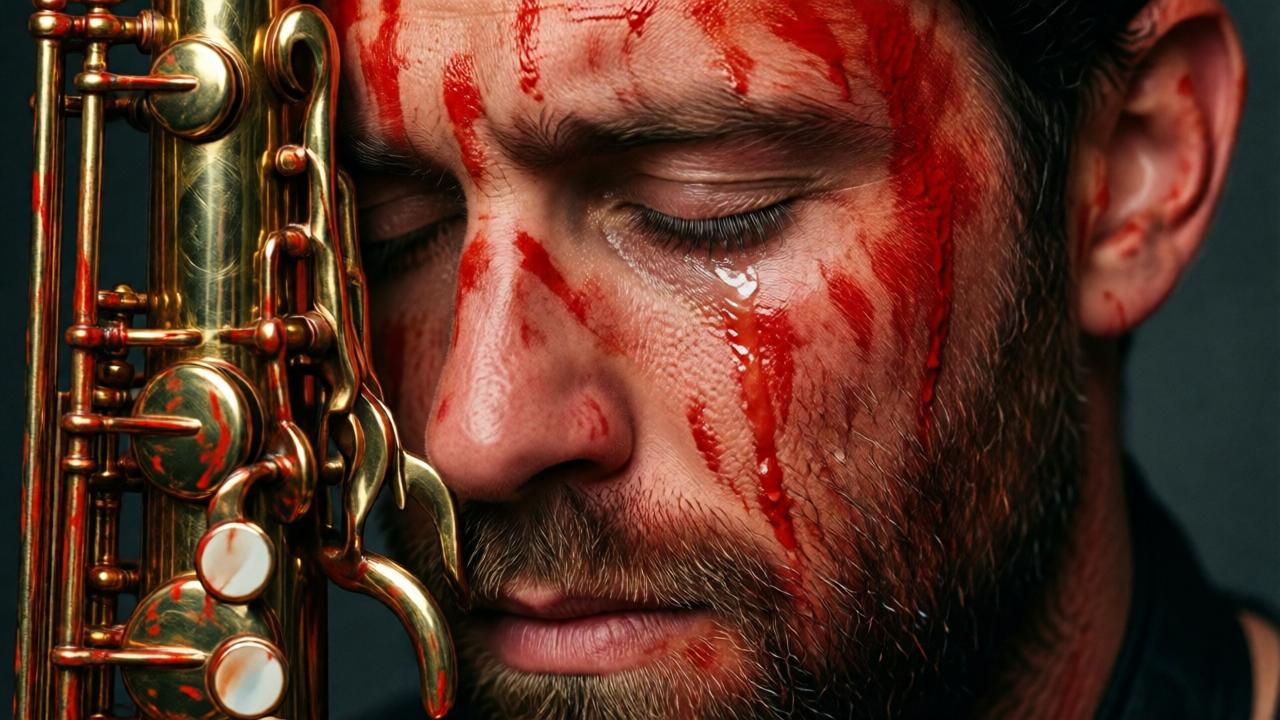
Absolute, deafening silence descended. Not a cough, not a rustle. The laughter had died, strangled by the beauty of the lament. He finished, “After all these lonely years, I’m still standing, through the pain and through the tears. God remembered, God remembered me.” For a moment, time stood still. Then, as one, the entire hall rose to its feet. The silence shattered into a thunderous ovation—applause, shouts, unabashed tears. Claire, weeping, rushed back on stage. “Where did you learn that song?” she demanded, her hands trembling. Daniel, bewildered, said it was the only memory he had left of his parents, that his father played it every night before bed. Claire went deathly pale, her hands flying to her mouth. It was the song her husband had composed and played for their son, Michael, every single night. The son who had disappeared on a family trip fourteen years ago. Her husband had died of a heart attack weeks later from the grief. The pieces, impossible and miraculous, clicked into place. The paint-smeared man before her was her son.

Their embrace on the stage, a mother clutching her lost child found in the most unimaginable of circumstances, was a sight so powerful it made the hardened and the cynical in the hall weep together. As they held each other, the crowd’s cheers turned into a unified, roaring condemnation of Richard, who was being loudly booed and dragged out by security. The ‘bum’ they had sought to destroy had not only played his song—he had, with a few broken notes and a father’s lullaby, finally found his way home.