
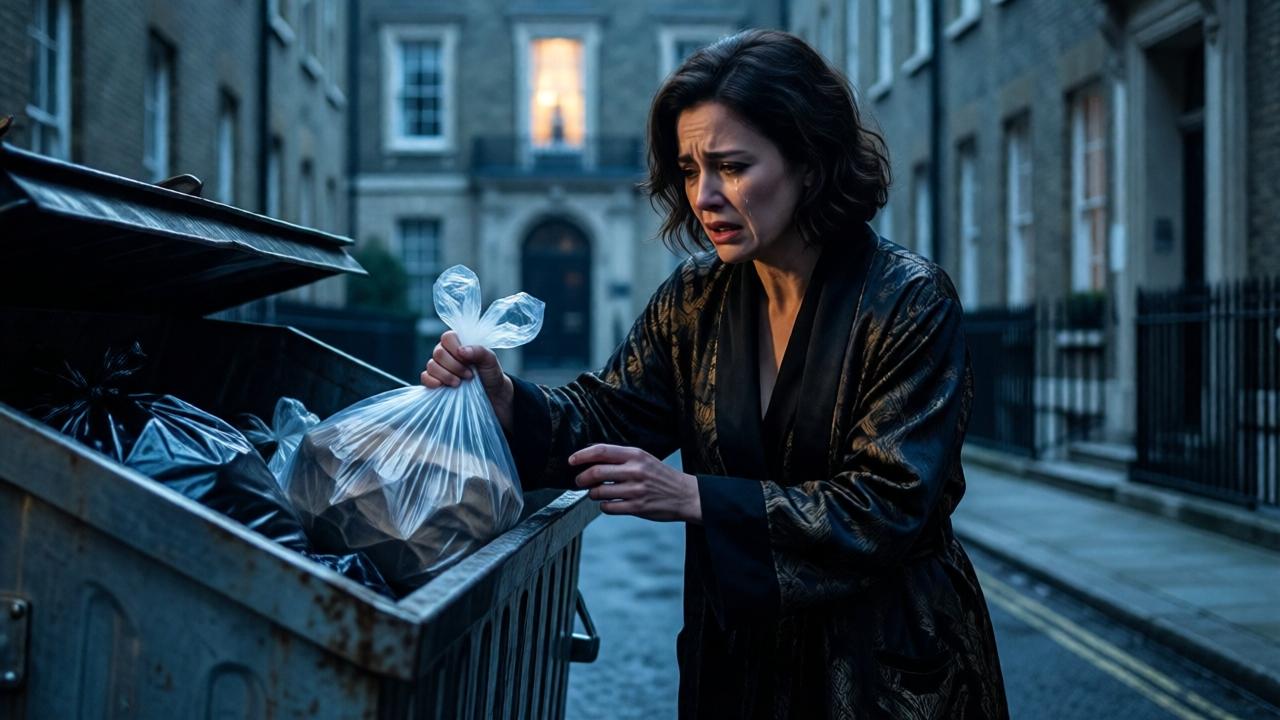
The chill of the night was nothing compared to the ice in her heart. In a pristine, gated community, Eleanor Van Derlyn, sixty and draped in silk, stared at the squirming newborn in her arms. His birth was not a miracle but a catastrophic error, a secret that threatened her meticulously curated world. ‘What will people think of me?’ she whispered to the sterile walls, her voice a tremor of pure fear. That night, joy was not just absent; it was replaced by a primal, selfish terror. She moved with a horrifying, methodical calm, swaddling the infant not in a blanket, but in a black plastic garbage bag, as if disposing of spoiled leftovers. The dumpster’s metal lid clanged shut with a finality she desperately craved.
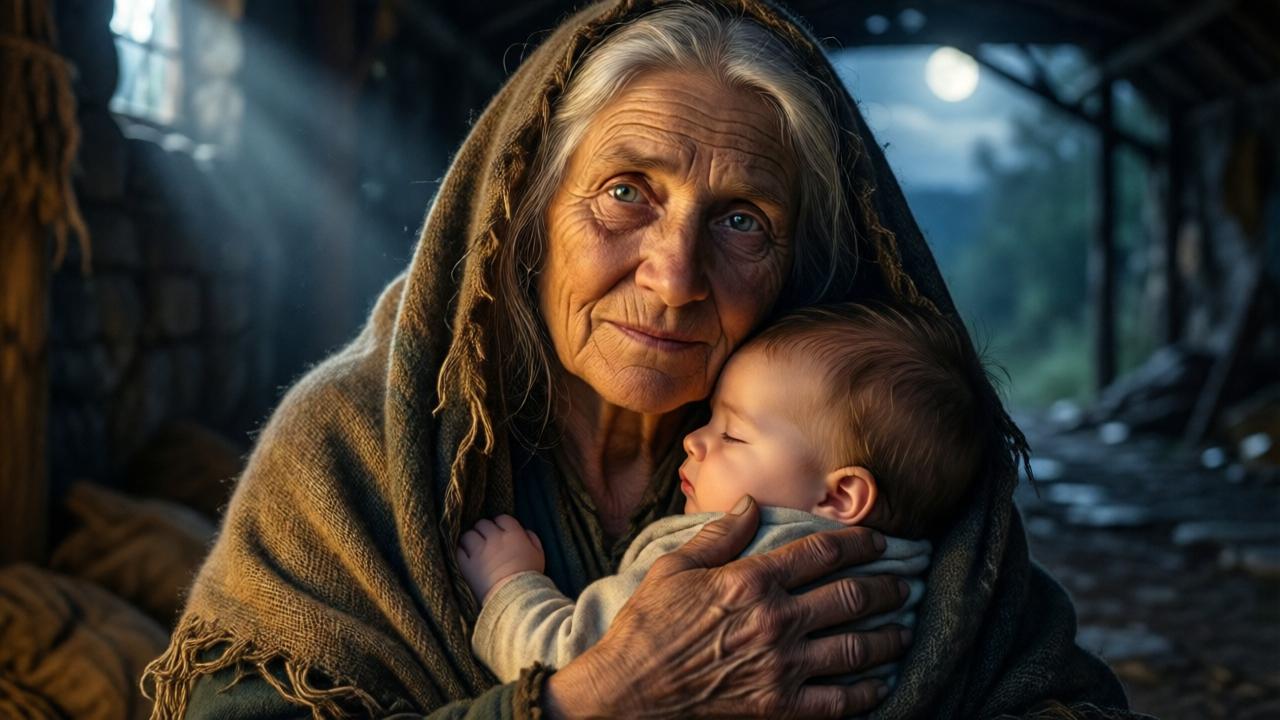
But fate, it seems, has ears in the darkest places. Just a few feet away, Agnes, her hands gnarled and cracked from decades of survival, was foraging for her supper. Her world was the rustle of paper and the smell of decay. Then, she heard it—a faint, mewling cry, so fragile it could have been the wind. ‘Just a cat,’ she thought, but her heart, long dormant, clenched. With trembling, filthy hands, she tore open the bag. Inside, a baby boy, his skin tinged blue, fought for his next breath. In that instant, the universe shifted. This woman, who owned nothing, possessed everything he needed. She pulled him to her chest, the heat of her threadbare coat seeping into him, and made a vow into his tiny ear: ‘You won’t die while I’m here.’
From that day, two parallel lives unfolded under the same city sky. Agnes begged with a new purpose, her head bowed not just for herself, but to plead for milk. ‘Please, sir, just a little for the baby,’ she’d murmur, her eyes avoiding judgment. Nights were spent sitting upright against brick walls, the child cradled in the valley of her lap. On winter nights so cold the air hurt, she would unbutton her layers and press his small form against her frail, warming skin. Her old, sick body, forgotten by the world, became his fortress, his only home. Across town, Eleanor slept on Egyptian cotton, swallowing pills to ensure no dreams—or at least, she pretended they worked.
The boy, named Leo by Agnes, grew. He saw her struggle in every line of her face, in every coin painfully collected. Hunger was a familiar guest, but love was the permanent resident. He had no toys, but he always had arms to hold him. By fourteen, his childhood was over; he worked by day, studied by night, his eyes old with responsibility but his spirit unbroken because the woman who raised him never yielded. ‘We are a team,’ Agnes would say, her voice rough but sure. They saved, coin by coin, until they could buy a crumbling shack—a palace built on sacrifice.
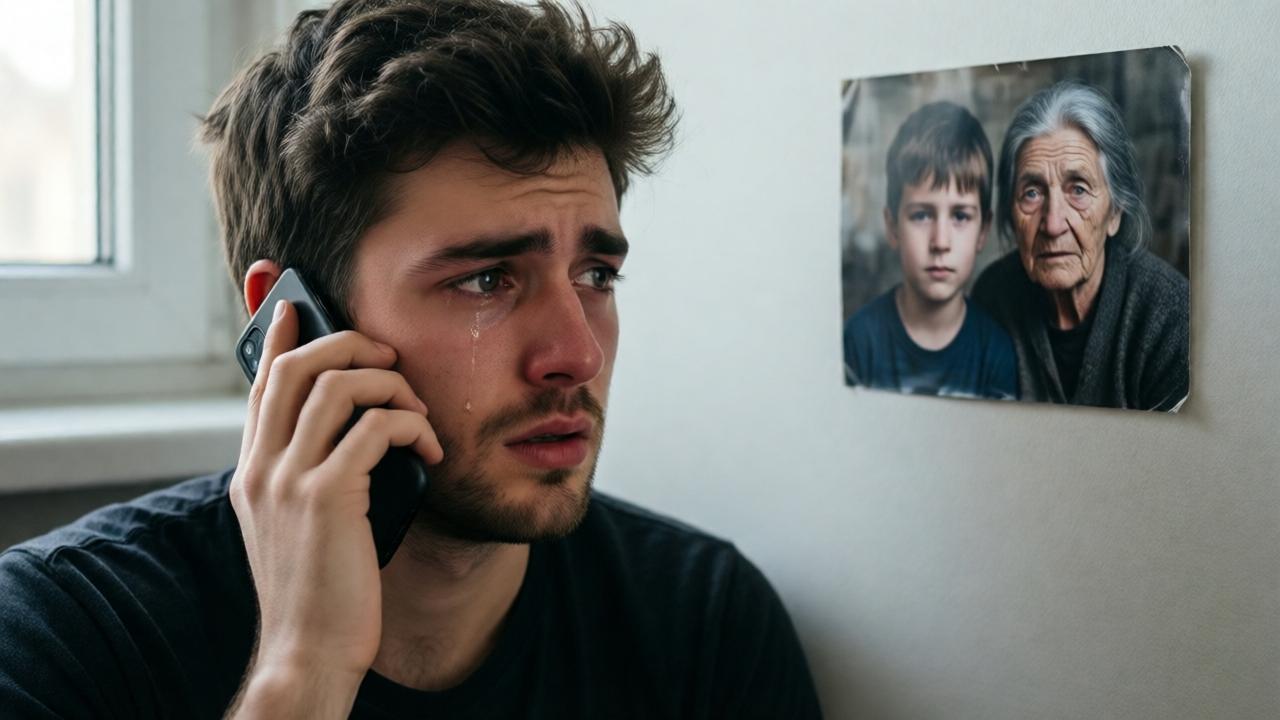
Then, the past called. Years later, a man now, Leo’s phone buzzed with an unknown number. A voice, frail and trembling with decades of buried guilt, crackled through. ‘Hello, were you born on January 1, 2000?’ The world narrowed to the sound of his own heartbeat. A heavy silence hung between them, across the chasm of their lives. Then the voice broke, asking the only question that had haunted its owner for two decades: ‘I just want to know, are you still alive?’ Leo’s gaze drifted to the lockscreen on his phone—a picture of Agnes, smiling her toothless, beautiful smile. He was silent for a long, long time. The weight of two mothers, one of trash and one of treasure, settled upon him. The next words he would speak would define not just his story, but the very meaning of family.