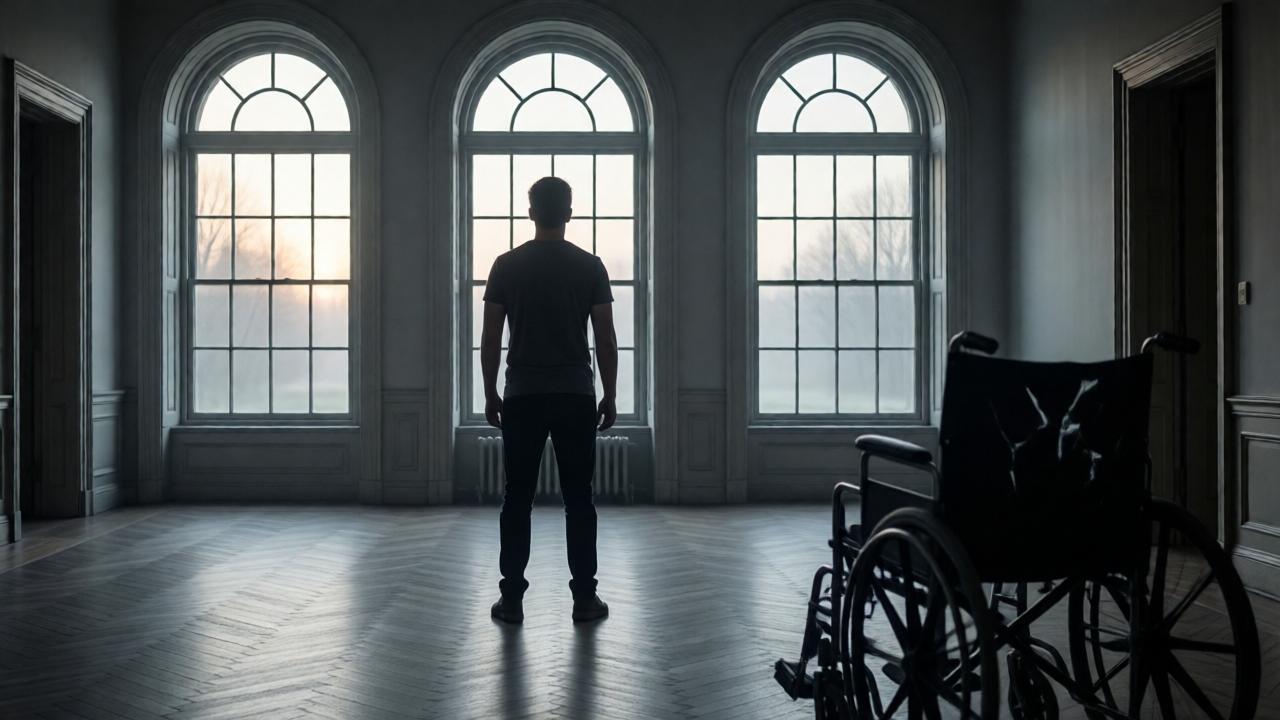

The grand staircase of the Sterling Mansion had always been a symbol of opulence, but on that fateful night, it became a weapon. Noah Sterling, confined to a wheelchair for years, felt the cold marble rail under his fingertips as he maneuvered near the top. A shadow fell over him. “You shouldn’t be here,” a voice, chillingly familiar yet subtly alien, hissed from behind. Before Noah could turn, a violent shove sent him and his chair into a terrifying, tumbling descent. The servants’ screams echoed through the hall as metal and wood shattered on the floor below, a symphony of destruction that everyone believed was a death knell.
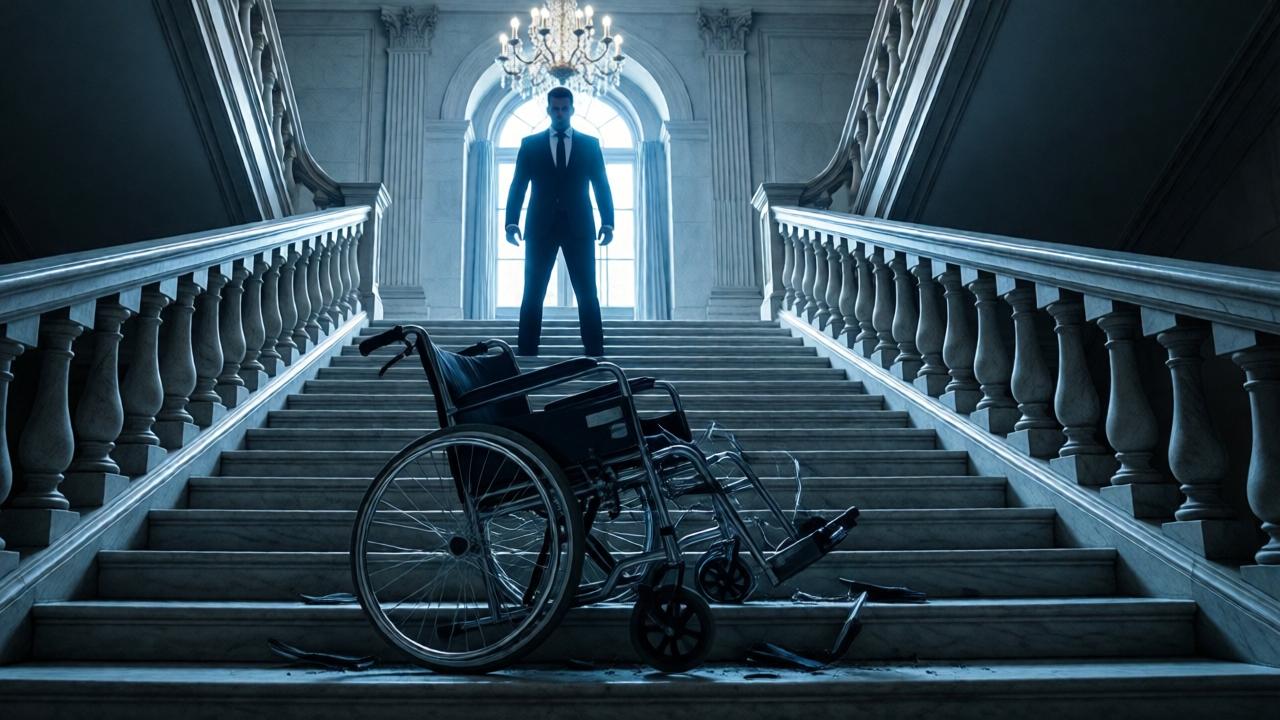
A collective gasp held the air as servants rushed to the broken boy. Then, the impossible unfolded. Amidst the wreckage, Noah’s eyes fluttered open. With a grimace of pain and profound determination, he placed his palms on the cold floor and pushed. Muscles, long thought atrophied, trembled but held. He rose. A stunned silence swallowed the room as he stood, for the first time in a decade, on his own two feet. He took one shaky step, then another, his gaze locked not on his own miraculous legs, but on the man at the top of the stairs. William—or the thing wearing his face—stared back, his arrogance dissolving into raw, undiluted terror. “Don’t move,” Noah commanded, his voice quiet but iron-clad, freezing the impostor in place.
Noah’s eyes, usually so gentle from behind his books, now burned with a cold fire. He pointed to the ornate corners of the ceiling. “There are cameras all over this mansion. I installed them weeks ago, when my ‘father’ returned from his mysterious trip sounding just a little less like himself.” The color drained from the impostor’s face, leaving a waxy, panicked mask. Then Noah delivered the line that shattered the last pretense. “You are not my father.” The silence that followed was absolute, heavier than the mansion’s stone walls. Noah walked forward, each step a declaration of war, and grabbed the man’s jaw. With a sickening pull, he ripped away not just a disguise, but the entire illusion. The face beneath was a stranger’s—a cunning, desperate thief who had played a monstrous role.

As the police led the sobbing impostor away, he confessed his plot to steal the Sterling fortune. But his answers only deepened the void. “I found him already gone,” the man stammered, his bravado gone. “The house was empty. I just… saw an opportunity.” The confession left a haunting question hanging in the air, more painful than any physical fall. Where was the real William Sterling? Was he lying trapped in some forgotten cellar, or had he met a darker fate before the thief ever arrived? Noah, now standing tall in the foyer his father built, looked not at the gathered crowd, but at the dark, winding corridors of the home that had become a gilded cage and a crime scene. The mystery of his father’s disappearance was now his to solve. The silent, observant boy in the wheelchair was gone. In his place stood a man ready to tear his own house apart, stone by stone, to find the truth.