
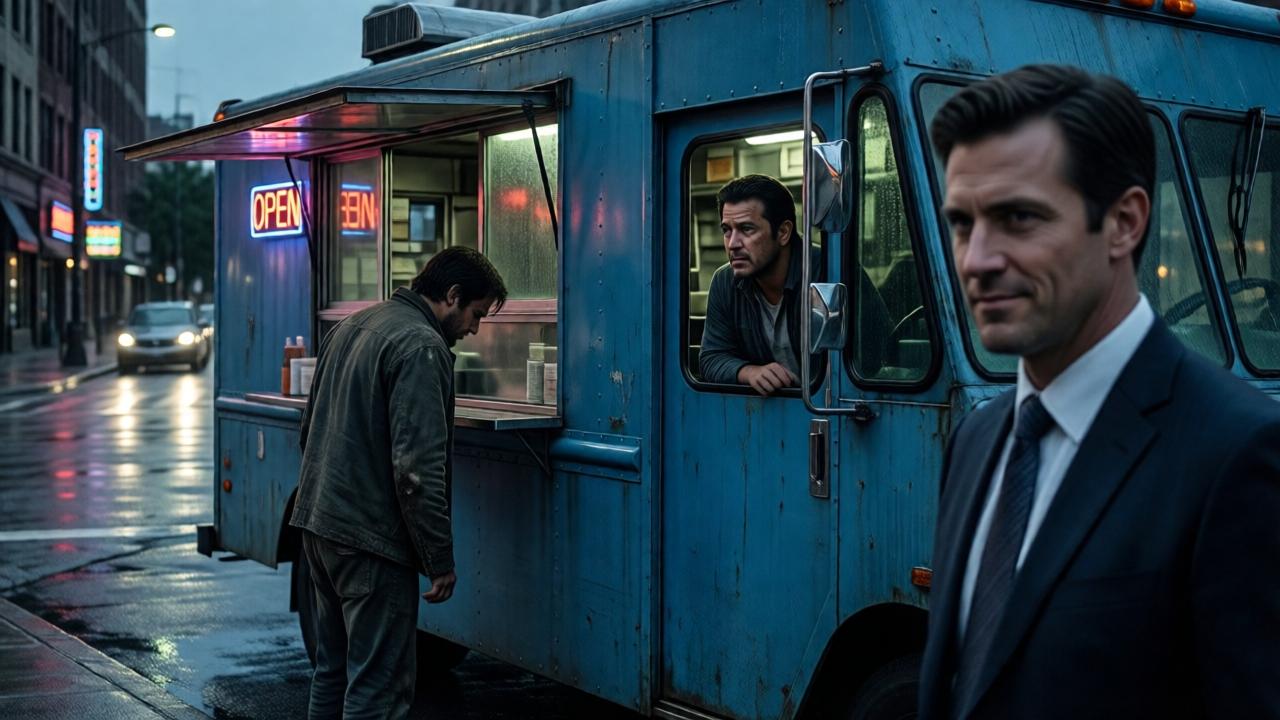
The Houston night was thick with the scent of diesel and desperation. Daniel Rivera’s hands were steady on the grill, but his heart was a frantic drum against his ribs. This old food truck, bought with his wife Emma’s sold jewelry, was their last hope. Not a single customer had approached. Then, a shadow fell across the counter. A man in threadbare clothes stood there, his eyes hollow. “Sir, could I possibly get a sandwich? I haven’t eaten all day.” Daniel’s stomach clenched. He thought of the unpaid bills, the empty till. “I’m sorry, sir, I don’t think I can today.” The man’s hands trembled. “But I’m very hungry, please.” A well-dressed man standing nearby immediately smirked, his voice a blade of ice: “Buddy, this isn’t a charity. An able-bodied man shouldn’t rely on strangers for food.” Those words struck Daniel like a hammer, echoing his own fears. He stood paralyzed, struggling with a decision that felt like it would split his soul in two.
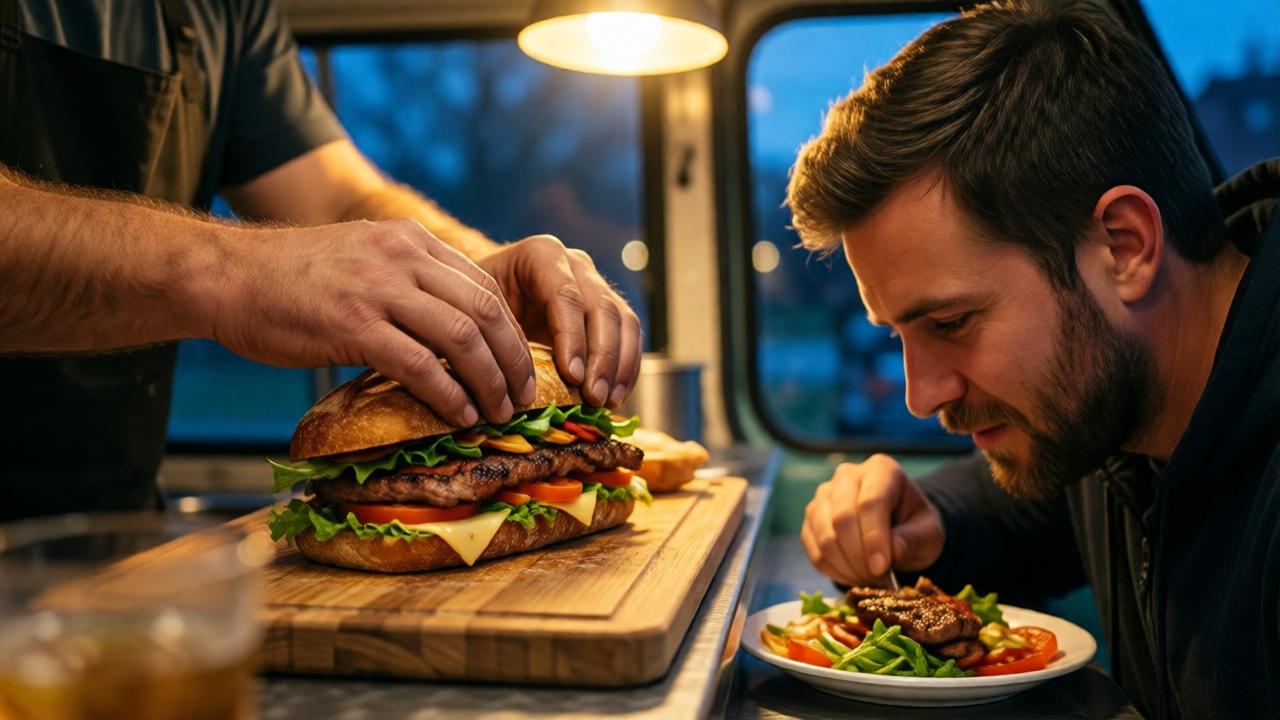
The memory of his whispered prayer before opening seared through him: “Lord, this food truck belongs to You.” As the hungry man nodded, accepting the rejection, and turned to melt back into the night, Daniel felt a sudden, undeniable compulsion—a voice not of logic, but of spirit. “Wait, brother,” Daniel called out, the words tearing from a place deeper than doubt. “Have a seat. Dinner’s on me tonight.” He moved with a reverence he didn’t understand, toasting the bread until golden, grilling the meat until it sizzled, assembling not just a meal, but an offering. He placed the masterpiece of a sandwich and a steaming drink before the man, who ate with slow, deliberate care, as if each bite were a sacrament. When he finished, he approached the counter. “Do you have a rag?” he asked. Daniel, bewildered, could only manage, “What for?” “To wipe the table. You treated me with respect. The least I can do is leave your place clean.”
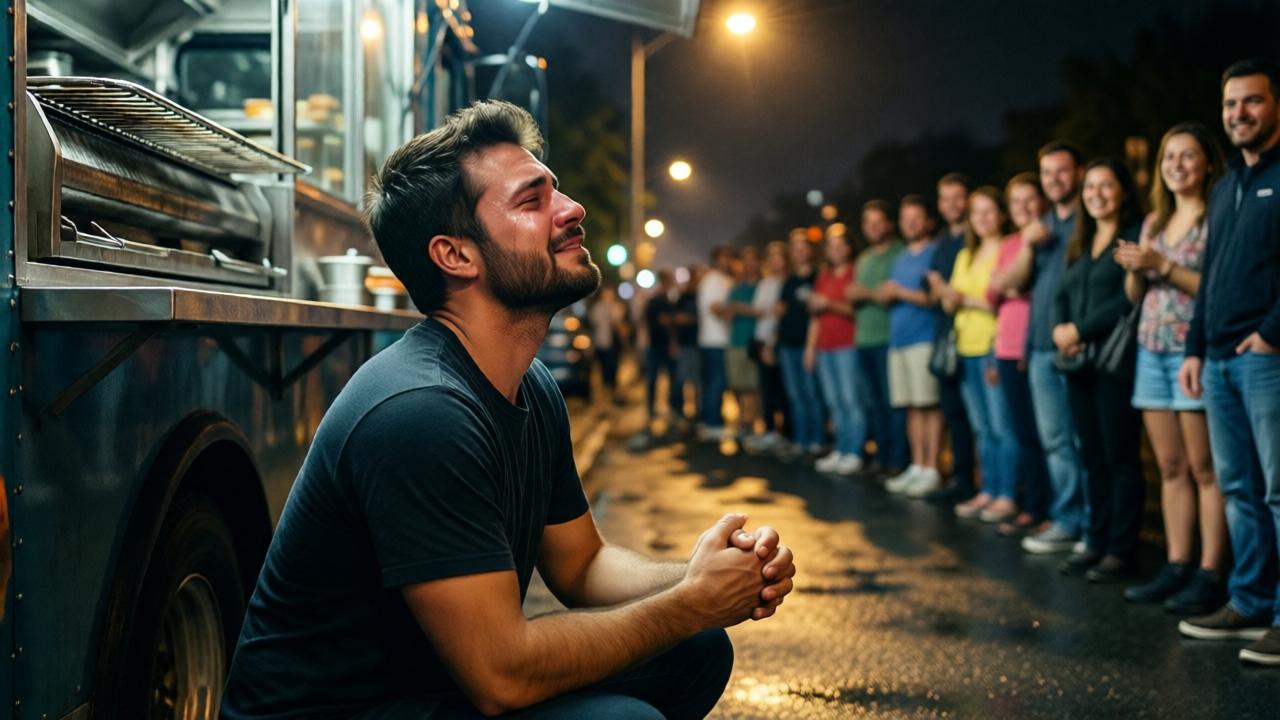
After meticulously cleaning the spot, the man folded the rag, looked up at the velvet sky, and turned back. His eyes now held a strange, penetrating light. “Cars may pass along this street,” he said, his voice low and sure, “and people might not notice this corner. But grace always knows how to find the right address.” Daniel stood utterly still, the air crackling with an unseen current. The man smiled, a glimpse of peace in the urban gloom. “Before this night is over, you will know that God saw what you did.” Then, he simply stepped away and vanished into the river of pedestrians. The silence he left behind was deafening. But at 8:30 PM, the first car pulled up. Then another. Then a stream. A group of nurses, weary from a long shift, arrived laughing. Soon, a line snaked down the block, a vibrant, chattering chain of humanity. Emma ran over, her eyes wide with disbelief. “Daniel, did we really sell everything?” By midnight, every scrap of food was gone. The grill was cold and empty. Behind the truck, hidden from the celebrating crowd, Daniel fell to his knees on the rough asphalt. Sobs wracked his body as tears cut trails through the grease and grime on his face. “Thank you, Lord,” he whispered into the now-blessed night. “I know You saw.” Sometimes God enters our lives not through parting seas, but through an empty stomach—a divine test to see what feast of faith or famine of spirit lies within our hearts.