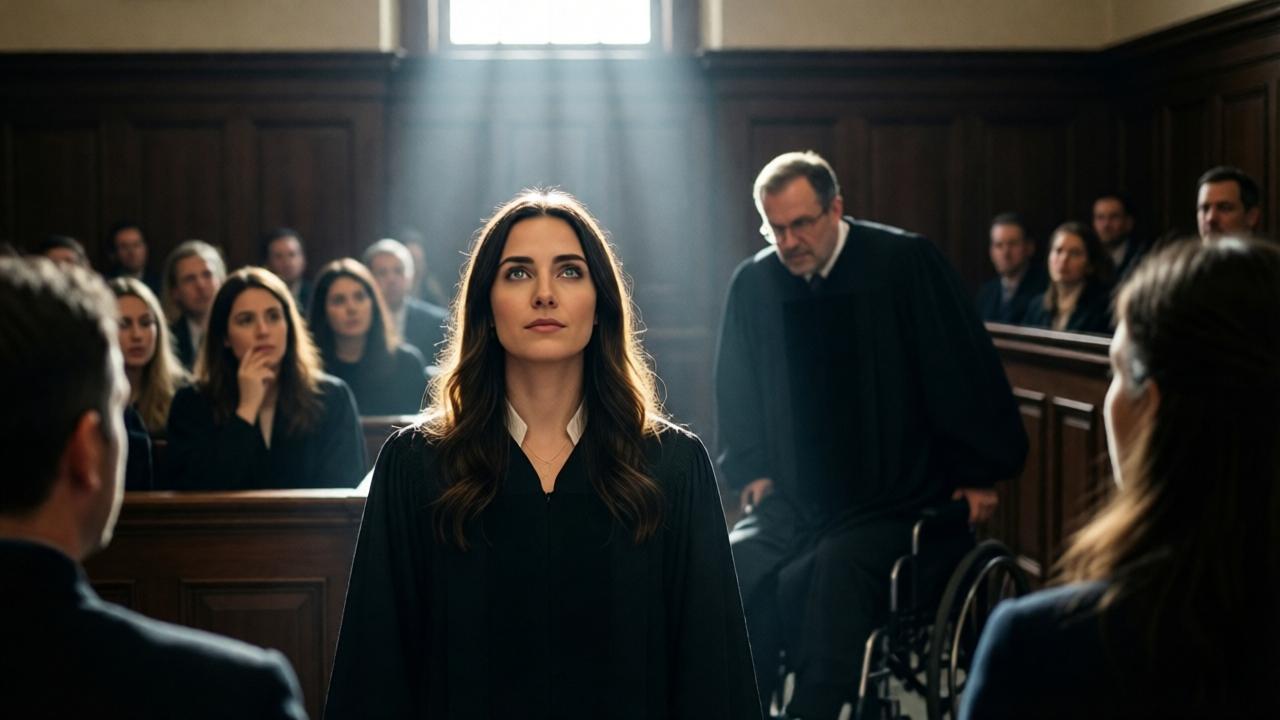

The gavel was poised to fall, sealing a man’s fate, when a voice, small yet sharp as shattered glass, pierced the heavy silence. “I will make the judge walk if you release my father.” The words, an arrow loosed from the bow of a seven-year-old girl named Veronica, struck the heart of the courtroom. Instantly, the solemn chamber erupted. Lawyers scoffed behind their hands, reporters scribbled with the frantic glee of those capturing a spectacle, and relatives shook their heads in pitying disbelief. There she stood, a slight figure in a simple dress and worn sneakers, daring to bargain with the most feared man in the city—Judge Fausto, a man who had not taken a single step in fifteen years.
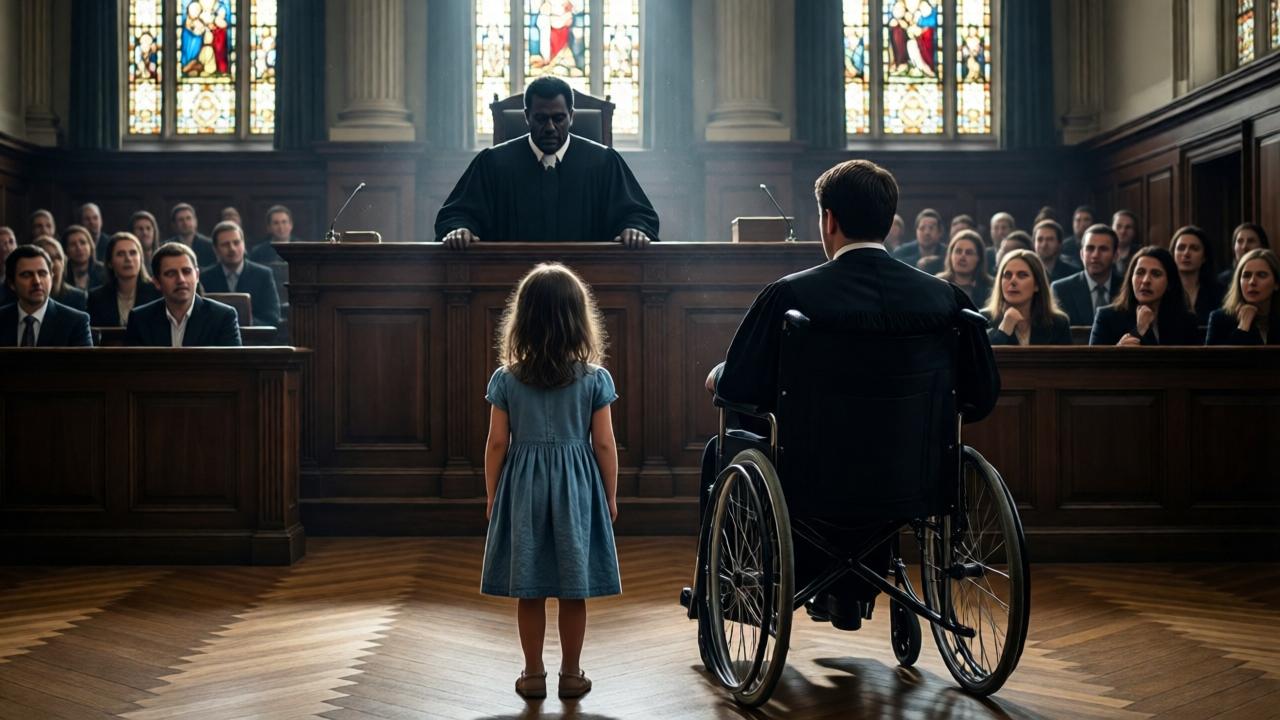
From his throne of wood and wheels, Judge Fausto fixed her with a glacial stare, the deep lines on his face maps of a lifetime of severity. “Child,” he said, his voice dry as old parchment, “this is a courtroom, not a circus. Your words do not alter the law. Your father will be convicted, and there is no miracle that will prevent it.” The laughter swelled. A woman whispered loudly, “The poor thing has lost her mind,” while a man in a fine suit added with a sneer, “Well, make him dance, girl, what are we waiting for?” In the defendant’s dock, Veronica’s father, his wrists bound, wept silent tears that spoke of a pain far deeper than any sentence. “Daughter, don’t do that,” he pleaded, his voice breaking. “Don’t demean yourself for me.”
But Veronica did not yield. She took a firm step forward, her small hands trembling, yet her chin held high. She looked directly into the judge’s eyes, and her voice, now clear and resonant, filled the space once more. “I will make the judge walk, but first release my father.” The phrase landed not as a child’s fantasy, but as a precise strike against a hidden fortress. Fausto’s knuckles whitened on the armrests of his chair. For fifteen years, he had built a life upon the unyielding rock of the law, a fortress to contain the rage and despair of his paralysis. Now, this girl spoke of dismantling it all.
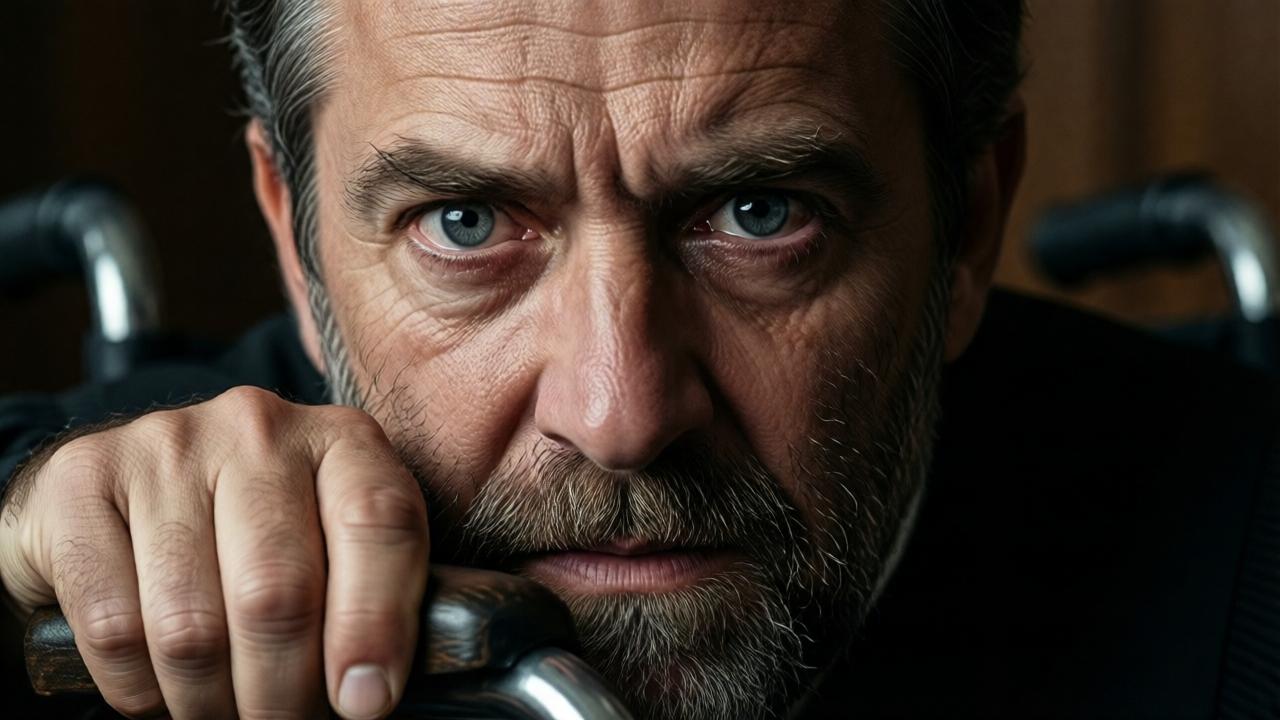
The judge tried to muster a dismissive laugh, but it died in his throat. The room had grown still, the mockery choked off by the gravity emanating from the little girl. Her gaze was not one of childish innocence, but of fierce, unshakeable faith—a luminous force in the dusty chamber. Clearing his throat, Fausto finally spoke, his voice laced with a defensive arrogance. “You have two minutes,” he declared. “Show me that impossible miracle and, when you fail, you will learn that justice is not bought with tears or with children’s tricks.” A dense, breathless silence seized the room. Not even the most cynical dared to utter a sound. All eyes were fixed on Veronica, who simply stood there, her small chest rising and falling steadily, her eyes locked with the judge’s. In that suspended moment, the air crackled not with the promise of a physical cure, but with the terrifying, beautiful possibility of a different kind of healing—one that could thaw a frozen heart and redeem a broken spirit.