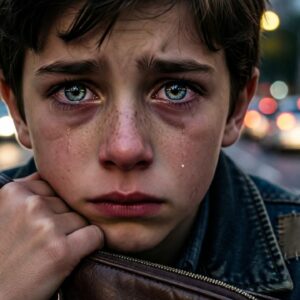

The air in the pharmacy was sterile, scented with antiseptic and quiet desperation. A man in threadbare clothes stood silently at the counter, his own need for cold medicine a silent plea. The door chimed, slicing through the quiet, and a boy in a wheelchair appeared, his small frame trembling not from the cold, but from fear. “Ma’am, I need medicine for a high fever,” he whispered, his voice cracking. The cashier, with practiced efficiency, politely asked the waiting man to hold on. The boy extended a hand, offering a crumpled, sweat-dampened bill. The woman took it, her professional smile fading as she held it to the light. Her brow furrowed into a deep crease of finality. “Son, this is counterfeit money.”
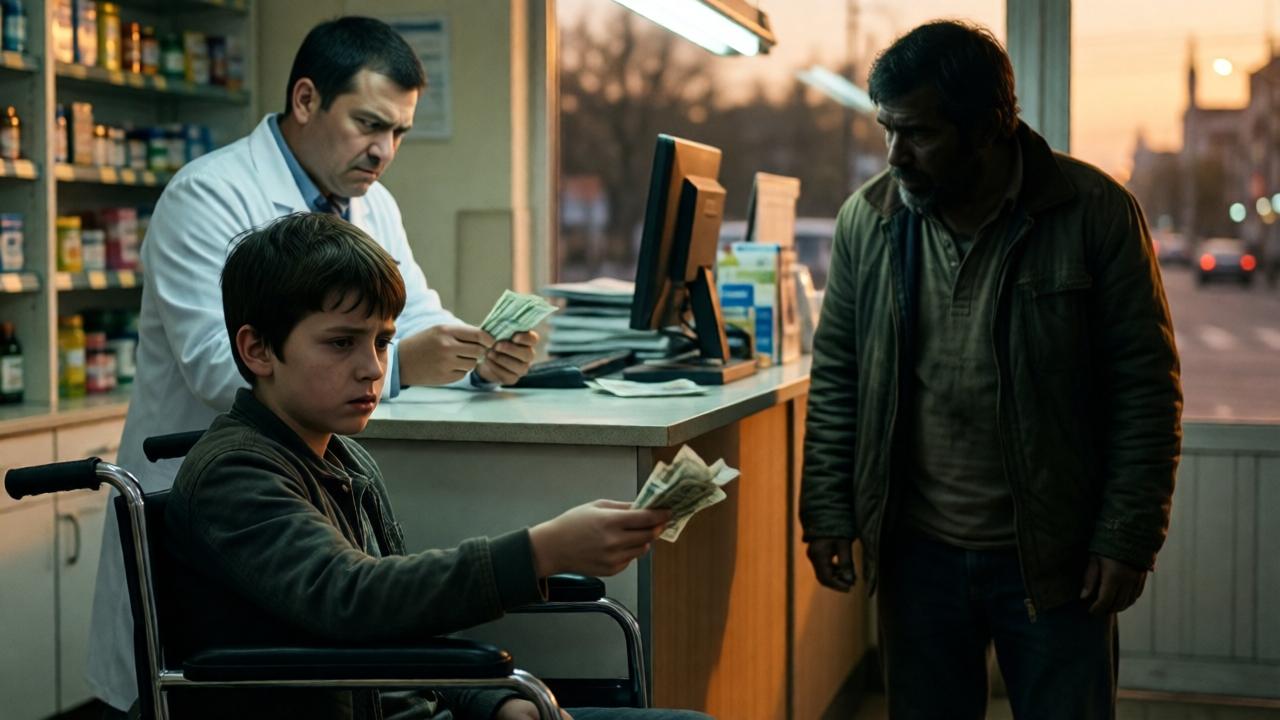
“That can’t be,” the child breathed, his eyes widening into pools of sheer panic. “This is all I have. They gave it to my mother this morning. She’s very sick.” The cashier’s reply was a glacier of policy. “I’m sorry, but we don’t accept these.” The boy’s head sank, a world of defeat in the gesture. “Please. My mom is really feeling very bad.” Then, a movement. The waiting man, who had been a shadow in the corner, stepped forward. “May I see it?” he asked, his voice gravelly. He took the counterfeit note, studied it for a moment that stretched into eternity, and then, without a word, pulled his own last, worn bills from a deep pocket. He placed them in the cashier’s hand and returned the boy’s note to him. “Check it again,” he said, his voice barely audible.
“Oh, this is real,” the cashier said, surprise lifting her earlier coldness. She swiftly bagged the medicine and handed it to the boy, whose relief was a tangible wave in the room. As the child wheeled away with his treasure, the man turned to leave. “I don’t need the medicine anymore,” he said quietly, a statement that hung in the air like a confession, and he vanished into the encroaching twilight without waiting for an answer. Unseen by him, a woman who had witnessed the entire exchange from the vitamin aisle felt a seismic shift in her soul. She followed him, a silent ghost at a respectful distance.
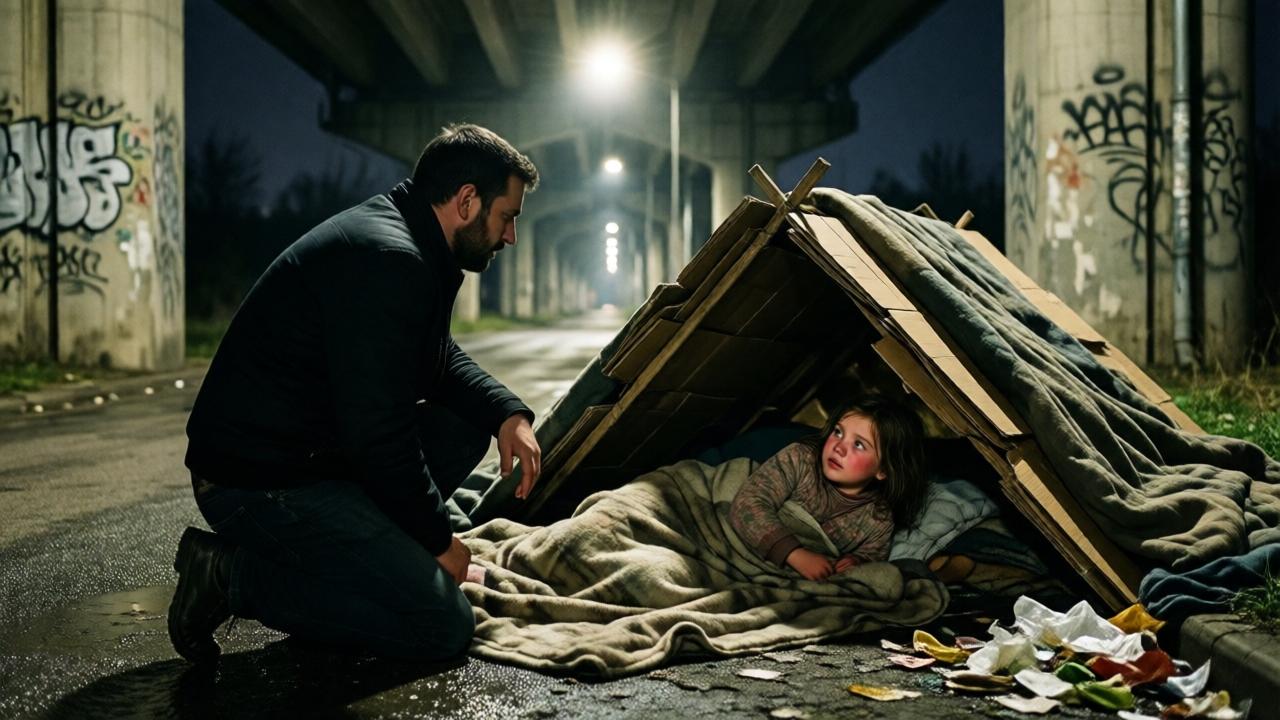
His journey ended at a dilapidated shelter under the bridge, a cathedral of concrete and despair. There, on a thin blanket, lay a little girl, her cheeks flushed with unnatural heat. “Dad, I’m cold. Did you buy medicine?” He sank down beside her, the weight of the world on his shoulders, and forced a smile that didn’t reach his eyes. “Not yet, sweetie. Have you eaten?” “No, I was waiting for you. After all, it’s my birthday today, remember?” The words, so innocent, were a dagger. It was then the watching woman, her heart breaking, found the courage to step from the shadows. “I saw what you did,” she said, her voice soft yet insistent. “Why did you give your last money to someone else’s child when your daughter is sick?” The man didn’t look up, his gaze fixed on the cracked concrete. “I don’t know. I guess I just thought, what if it was my child.”
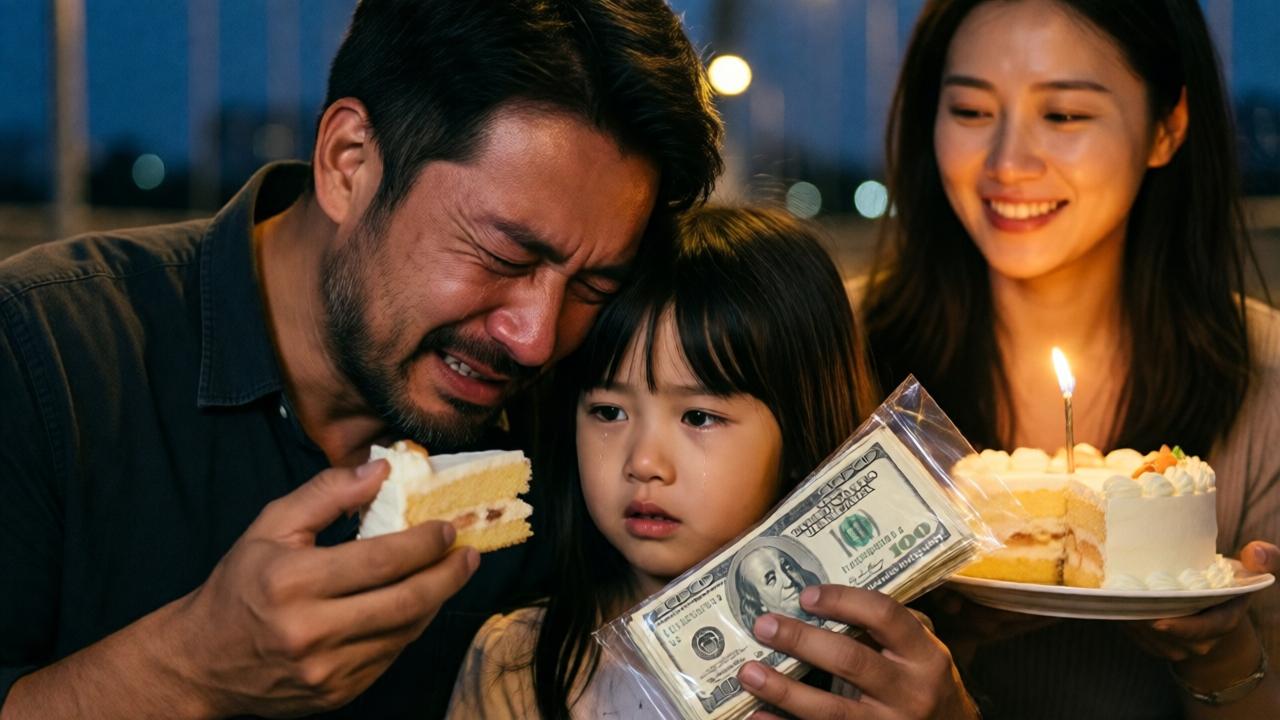
The woman nodded, a plan crystallizing. She pretended to receive a call and hurried away. The man held his shivering daughter, whispering empty promises. Then, a miracle in the gloom. The woman returned, not with pity, but with a small, beautifully decorated birthday cake in her hands. “Happy birthday! This is a small gift. Everything will definitely get better.” Bewildered, the little girl managed a weak smile. As the man cut the cake, the knife hit something solid. Neatly wrapped in film inside the sponge was a stack of bills—$10,000, a fortune born from witnessed grace. The man’s hands flew to his face, his shoulders shaking with silent sobs that soon broke into wrenching cries. He looked up at the stranger, tears carving paths through the grime on his cheeks, and whispered through a broken voice, “Thank you, God!” The woman simply smiled, knowing the truest currency had just completed its circuit.